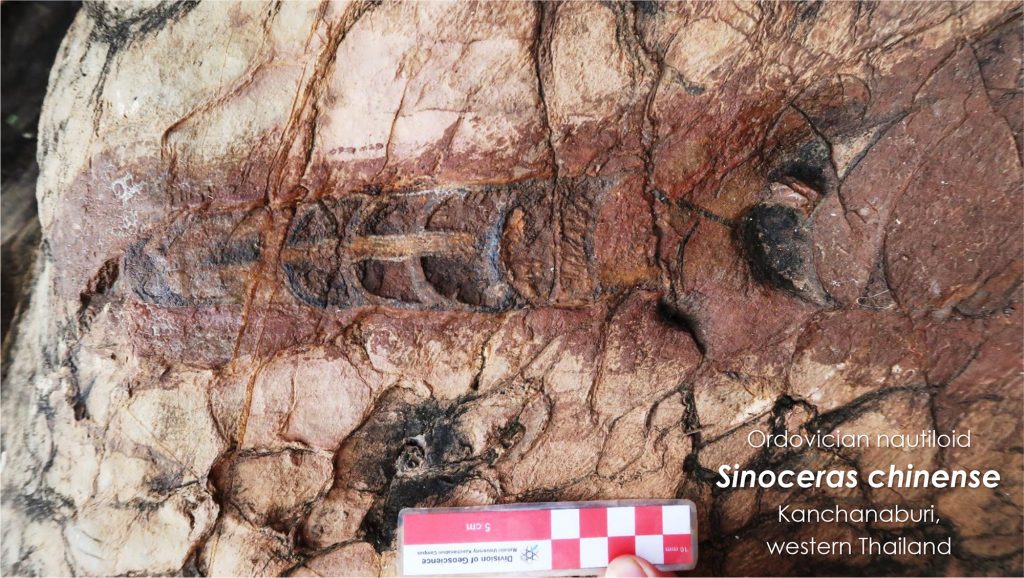
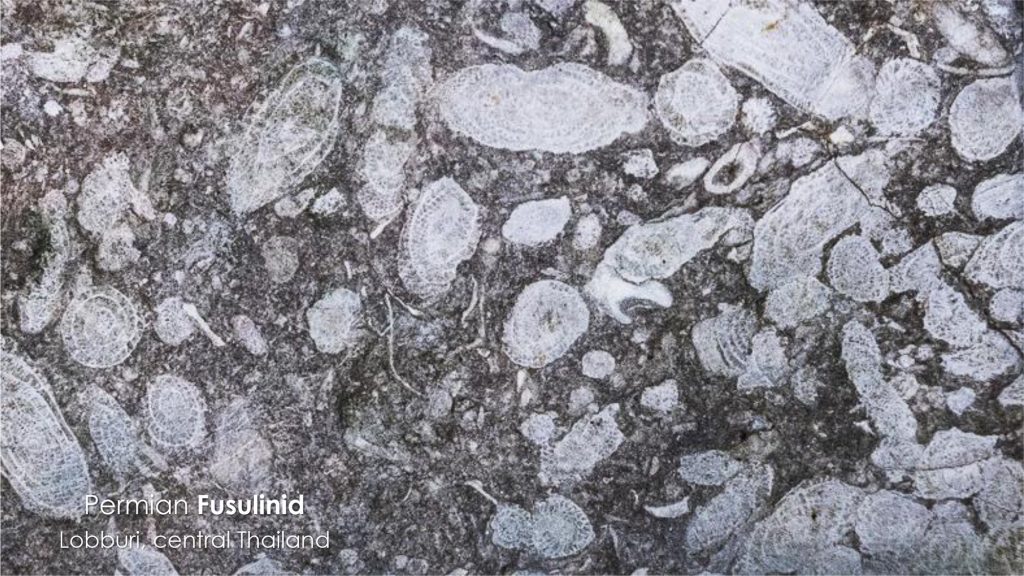
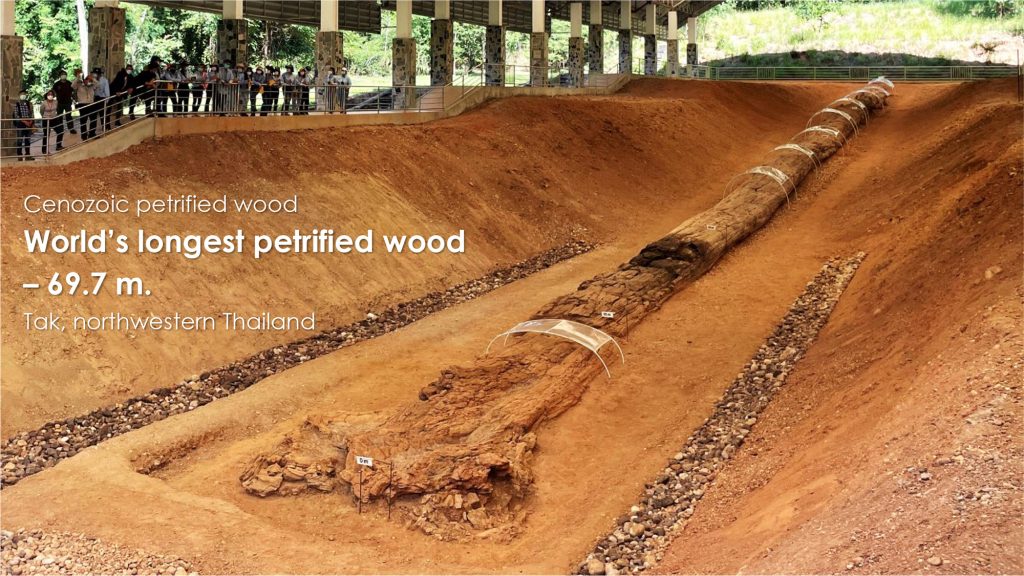
Thailand has a long and complex geological history spanning from the Cambrian to the Cenozoic, marked by changing terrane affinities, significant biogeographic shifts, and notable climatic changes. Important non–marine fossil localities have been discovered in northeastern Thailand, where numerous dinosaurs and other Mesozoic fossils have been described. Elsewhere, Permian limestones have yielded both cold–water and tropical faunas, recording the northward drift of the Sibumasu Terrane from Gondwana and its eventual collision with the tropical Indochina Terrane. In southern Thailand, abundant Cambrian to Devonian marine faunas reveal fascinating changes in climate and biogeographic connections. Significant Cenozoic continental fossils, including abundant proboscideans, chelonians, fishes, plants, and insects, have also been discovered in northeastern and central Thailand. Research in these areas is ongoing, with many Thai palaeontologists collaborating with colleagues from the United States, China, Japan, Korea, Australia, Malaysia, and several European countries.
These fossil localities will be explored through several pre– and post–conference excursions, which will take delegates to different regions of Thailand: the south (Cambrian to Permian), the north (Silurian–Devonian and Permian), the northeast (Mesozoic and Cenozoic), and the central region (Cenozoic and Permian).